


Timothy & Esther Keeler
Residents from 1769 to 1818
Timothy Keeler, Jr. (1748-1813) was born in Ridgefield.
Esther Kellogg (1748-1818) was born in Norwalk. As a young woman, Esther inherited property from her parents – a relatively uncommon practice during a time when women could not vote and, largely, were not allowed to own property. Esther would own and, later in life, purchase additional properties over the course of her adulthood, maintaining an economic independence that few women shared in the 18th century. Additionally, just a few months before her marriage, Esther purchased and enslaved a 14-month-old child named Betty Isaac. Little is known about Betty, although the museum continues to look for information about her life. During Esther’s life, the cruel institution of slavery was legal in Connecticut; Esther likely intended to raise Betty to assist in household tasks and childcare – a common practice at the time.
Timothy and Esther married in 1769 and had twelve children over the course of twenty years, seven of whom survived to adulthood.
It is unknown how Timothy was able to secure the 145£ needed to purchase Lott II from his Uncle David in 1769, shortly before his marriage to Esther. In 1772, he and Esther opened their private home to travelers and locals, thereby establishing T. Keeler’s Inn. Timothy and Esther renovated the property and reoriented the building in order to facilitate the loading and unloading of passengers and luggage arriving on stagecoaches. By 1790, the Keeler Tavern was a bustling and prosperous establishment.
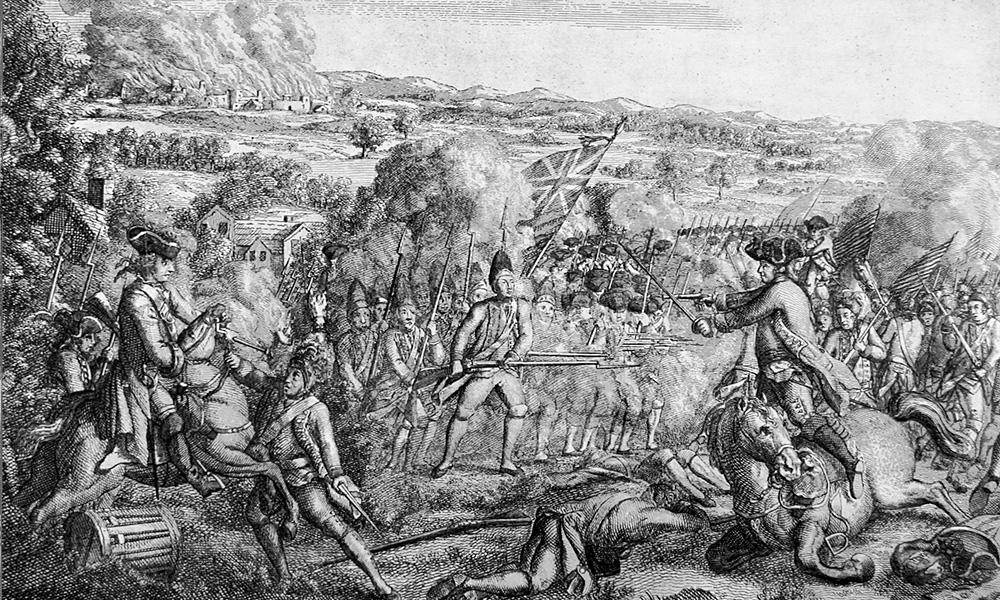 Print of the Battle of Ridgefield, first published April 4, 1780.
Timothy and Esther’s inn quickly became a landmark and a regular stop for those traveling between New York and Boston. Accordingly to oral traditions, the tavern was also a hub for revolutionary activities within the town of Ridgefield. Timothy himself had documented ties to the Patriot cause, including repeatedly voting for and participating in a 1775 boycott of British goods, even though doing so would have impacted him financially. It is perhaps because of this reputation for patriotism that the Keeler home and business were targeted by the British during the Battle of Ridgefield in 1777. To this day, a British cannonball from that attack remains embedded in a corner post of KTM&HC’s historic colonial.
 British cannonball still lodged in a corner post.
By the end of his life, in addition to running the tavern and general store, Timothy had been an importer, a ship owner, an investor in iron works, a political activist, and served as Ridgefield’s first postmaster. He died in 1815 – in debt – and his children inherited the property and business. Esther likely lived in the home with her children until her own death in 1818.
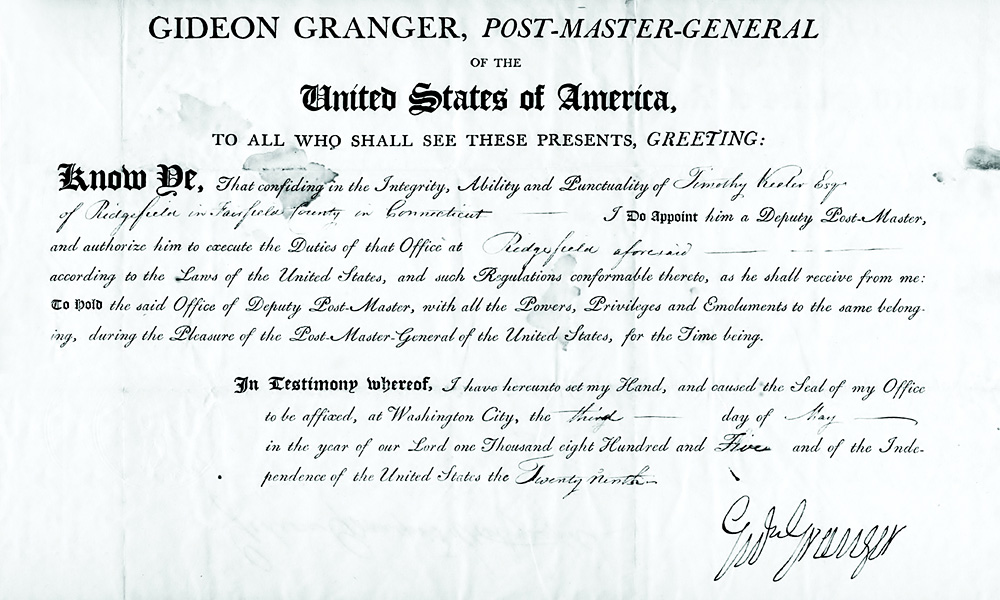 Certificate from the Postmaster General appointing Timothy Keeler postmaster of Ridgefield.
» Next: William & Anna Keeler